Which is heavier: 1kg of water, or 1kg of feathers?
The keen eye, or pretty much anyone who has heard this question before, will know they are the same weight.
But which one looks more impressive? Most likely the kilogram of feathers. I, for one, would love to see a giant feather ball rolling down a hill like a giant marshmallow, then bursting into a feather snowstorm when it hits the bottom.
I digress…
Marketing is a little like that. It has 2 jobs: 1) Get attention; 2) Gain Trust. Both are like 1kg weights, and only one of them may look more impressive on a report.
The Problem with Measuring Trust in a Sales Funnel
A lot of marketing reporting focuses on the attention part. After all, it’s an easy number to make look pretty.
“You’ve grown your traffic from 200 impressions a day to 5000. That’s a 25x increase.”
That is a real result and in a purely numbers game, a lot of traffic will eventually lead to some sales. It’s basic maths. More people at the top of the funnel, more people will get to the bottom, assuming nothing else changes.
The trust part is much harder to sell; because the real measures of success are improvements in sales, a growing number of positive reviews, or more goodwill in the market. It’s slower, less photogenic, and harder to put on a dashboard.
So sometimes it looks like the trust and reputation building efforts don’t work. It’s not that it doesn’t work, it’s just that it’s hard to put the number down on a piece of paper.
So many marketing campaigns pour money into the part that looks more tangible. It’s easier to justify it.
The Shape of the Funnel Matters More Than the Volume
Here’s my proposition.
Getting attention pours a lot of water into the top of your sales funnel. That’s useful. But it does nothing to the shape of the funnel itself.
What if you can change the shape of the funnel?
Projecting the trust and credibility you already have changes that shape. A funnel that is wider all the way through, with a wider outlet at the bottom, lets more of the water get through. Even if less goes in at the top.
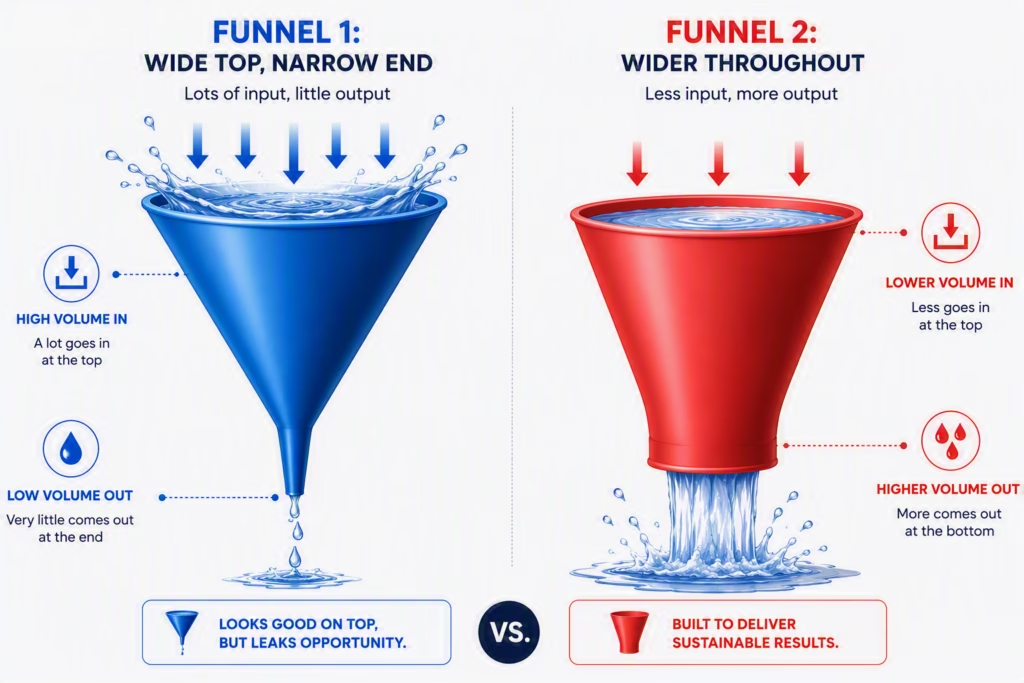
The first funnel looks better from above. There’s more going in, more splashing about, more activity. The second one delivers more with less.
This isn’t an argument against getting attention. You still need water going in. But pouring more in through a narrow funnel has a ceiling and most businesses hit that wall before they realise that the shape of the funnel has a problem.
Another caveat is that this image how AI thinks all this looks like. In practice, it’s a lot more complicated, but this is a great visual representation.
This is not Just a Metaphor
The effect of visible proof on conversion is one of the few parts of this that has been properly measured.
Northwestern University’s Spiegel Research Center studied how online reviews influence sales and found that displaying reviews can lift conversions by up to 270%, with the effect strongest for higher-priced, higher-consideration purchases. (Spiegel Research Center, 2017)
That is the funnel changing shape. Same traffic, same product, same price. The only difference is that the proof a business had already earned was visible at the moment when someone was deciding.
The Second Effect: Water That Finds Its Own Way Back
There is another part to this, one that I can’t really show in the diagram, because I can’t really do it justice with an image of a funnel.
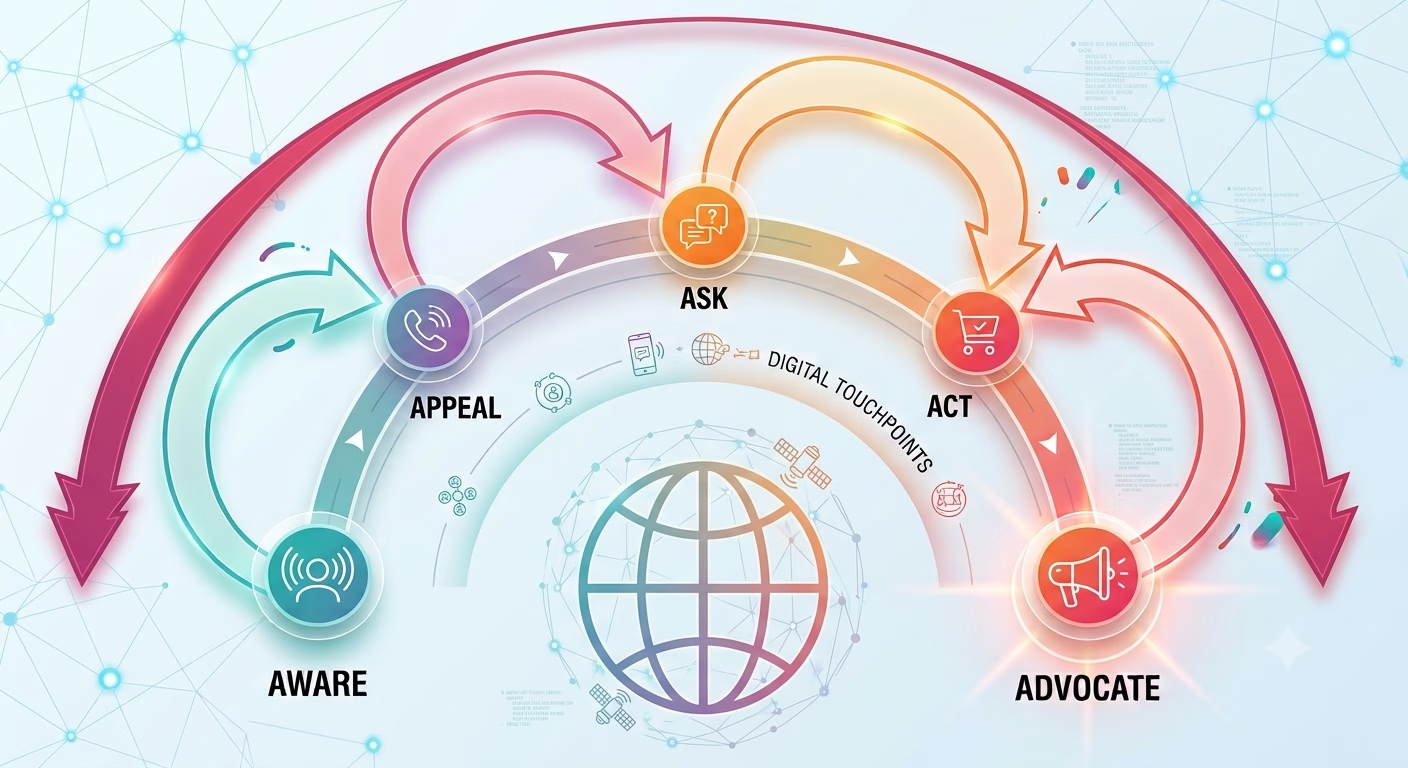
Part of any good trust plan should build on your business’s advocacy: the people who are happy enough with you that they will tell others about you. In some cases, even people who have not bought from you yet, but liked what they saw so much that they will happily recommend you to others.
That advocacy does not sit at the end of a journey. It feeds back into the top of it. A recommendation from someone, whether it’s your client or not, to a prospect is one of the most persuasive things in your favour. And it is there even before your marketing has started pouring water into the funnel.
In other words, a good Trust Strategy creates a loop, where the people you have already served keep feeding the funnel with warm leads for you.
So What Should You Actually Measure?
What really matters.
You got into business so that you can make some money, not to become the next viral hit. So start there.
What’s worth measuring:
- How long your sales cycle actually takes: From the first enquiry to purchase. If we accept that trust helps smoothen the sales funnel, then the distance between the top to the bottom is an indication of how visible trust is or isn’t there.
- Where prospects go quiet: The stage where people stop replying is usually the stage where something they needed to see, was not easy to find. What that is, is a question worth probing.
- What people say when you ask how they found you: Most businesses never ask that question; or never record it. It is the cheapest available window into the people who heard about you, and from where. It will give you a good idea what is on that channel that makes someone take the leap to call you.
- Whether your proof is anywhere near the decision: It’s not just about whether you have reviews, or testimonials, or case studies… Do they appear at a point when someone is deciding whether to use you?
All of these do not produce a precise number like 2895 impressions this week. But it tells you what shape your funnel actually is.
The Real Question
So you can ask how much water you are pouring into the top of the funnel, which may look great, but I suspect what you really want to know is how much of that water is making out at the bottom…. And for me how much of it is finding its way back to the top on its own is where the gold is.
Both jobs weigh a kilo.
Can the Trust Strategy Framework help your business? If you have been putting time and resources into marketing without getting the results you hoped for, don’t start re-inventing the wheel. You just need to find where the tyre is leaking and fix it.
If you want to know more, book in a Trust Strategy Call with me.
Or if you’d rather see where your business stands right now with a simple 10-minute self audit, click here to start your free Trust Audit.