Bob referred you. Bob didn’t seal the deal. And he’s not your uncle.
Two reports came out this year with the same number: 83%. It’s a cute coincidence, but it points at something that happens in many referrals, and nobody in the room ever sees it happening.
I nearly didn’t either.
The Referral That Wasn’t What It Looked Like
A client, now a repeat client, called me and said he’d been referred through a BNI contact to create some marketing assets. If I’d left it there, I would have logged it as a clean referral. That’s BNI, I see it every week.
Except as we had further conversations, I uncovered something else. He’d been through my website and looked at my past work first, before calling.
To paraphrase him: being a BNI member, and being referred, made me naturally more trusted than a stranger off the street. But he still needed to check I could actually do the job.
The referral didn’t close that deal. It got me on a shortlist, a one-name-long shortlist, maybe, but still a shortlist. What closed the gap between “I’m interested” and “I’m confident enough to call” was everything he found when he went looking.
What Two Separate Reports Both Found
So what does this story have to do with those two reports?
LocaliQ’s 2026 Small Business Marketing Trends Report surveyed more than 300 small business owners, mostly in the US and Canada, and found 83% of them name referrals as their top acquisition source. Worth noting: this figure is owners self-reporting where they believe their clients come from. There is no tracking data behind it.
This is an important distinction as you will soon see.
The other is Reddit x SurveyMonkey’s “Hidden B2B Journey” survey, polling 1,202 US business decision-makers between December 2025 and January 2026. It found a different 83%: that’s how many B2B buyers do their own research before ever speaking to sales.
Both American studies. But I’ll bet my flat white that what happens in an Australian business isn’t wildly different. The accents may differ. The Googling doesn’t.
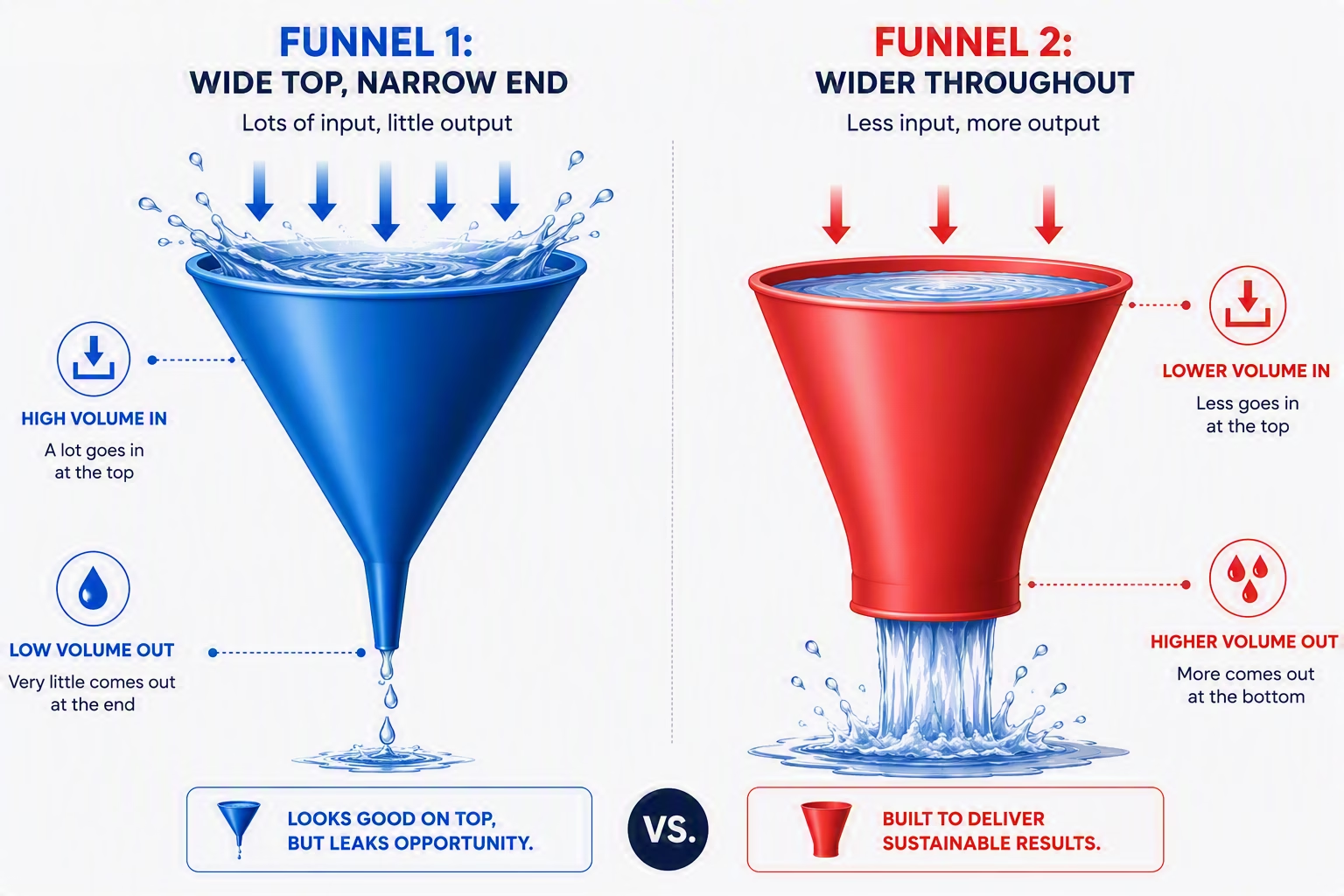
Referrals are Only the Surface, the Research is Under the Waterline
Put those 2 numbers together, here’s an analogy of what that gives you.
Bob refers Mary to you. She calls. For you and Bob, that’s the whole story, because on the surface, Mary said “Bob told me to call you because you’re good at what you do.”
The referral looks like the acquisition source. (And for 83% of businesses, they are happy to report it as such)
Nobody saw the part where Mary spent time on your website, your LinkedIn, peer reviews, or various social channels or just ask around, before she actually dialled. The reality is, there’s a real chance that, had she found nothing in her research, she wouldn’t have called at all.
And you may never have known that.
The same Reddit report found that 65% of B2B buyers wrap up their research within a week, but 31% are still at it several weeks later. That figure isn’t specific to referral traffic. But if 83% of buyers are doing this kind of research at all, it means a meaningful share of your referrals are quietly running their own due diligence, on their own time, somewhere you never see it happening.
And what they find there may still decide whether they call. In my case, my client found what he needed.
Two Different Numbers, One Real Insight
It’s worth being precise about what these two reports actually show, since they measure different things and only look related because of the coincidence in the number.
LocaliQ’s 83% tells you what business owners believe drives their growth. Reddit’s 83% tells you what buyers actually do before they act on that belief. Neither figure proves the other. But placed side by side, they suggest something most referral-heavy businesses have never had reason to check: the referral may be starting the conversation, while something else entirely is finishing it.
If you dig a little further to discover what research looks like for a buyer, they are looking for corroborated evidence that you and your business can be trusted to do what they need you to do.
That’s my opinion from reading yet another finding on the Reddit X SurveyMonkey report: Biased information is one of the constant “fear” that any buyer has when doing their research. Yes, even a peer recommendation has a 41% reported perception that it is biased.
And I bring back my BNI experience here. Even in a referral situation, while the Mary may trust Bob, she doesn’t know if Bob is recommending Francis because they are chapter members, or just a good friend; and Bob is ‘obliged’ to refer him.
Of course this is a simplification of things, and I will be first to admit that there are many factors that can change the maths behind how much Mary will trust Bob’s referral. However, from personal experience, and I do the same thing myself when someone refers a supplier to me, I do question that referral and do my due diligence before calling
From my earlier story, my client certainly did.
What This Means If Your Business Runs on Referrals
If referrals or Word-of-Mouth as it is sometimes called, are your main channel of customer acquisition, and for many founder-led businesses they are, this is worth sitting with rather than dismissing.
The referral is doing real work. It’s getting you noticed, and it’s lending you some borrowed trust before a stranger has any reason to extend their own. That part isn’t in question.
What’s worth checking is what happens next, in the part of the journey you don’t get to see. When someone you don’t know yet goes looking for you, based only on a name someone else gave them, what do they actually find?
Do you know? And I mean really know? Beyond: I have a website that is up-to-date, I do some email marketing, and have been posting on my social channels; What are all of these saying together?
Can the Trust Strategy Framework help a business built on Referrals or Word-of-Mouth?
The question for you is: Do you believe that you have built your business because you are trustworthy, reputable and credible?
If your answer to that is Yes; then is any of this visible to someone who only knows you from an email, a business card, or a phone number?
The Framework is built to answer one question: What will a prospect find if they start looking for you? Is it a business that they feel confident to call because they trust you to solve their problems? How are you making them feel confident?
If you want to know more, book in a Trust Strategy Call with me. Or if you’d rather see where your business stands right now with a simple ten-minute self-audit, click here to start your free Trust Audit.