Are Testimonials Just One-Off Videos for Your Website?
Are testimonials just one-off videos you put on your website, YouTube, or maybe social media?
BTW, that’s already a solid starting point. If you’re using testimonials beyond just your website, you’re doing better than most.
But there are many more ways testimonials and case studies can support your sales and marketing process, often in places where they can be really powerful.
So, the short answer to the question:
Can I use testimonials beyond my website?
Yes. And you absolutely should.
How Do Testimonials Actually Work?
To understand how testimonials can be used more effectively, it helps to first understand the psychology behind testimonials and case studies.
Oh, wait… let’s take one step back and answer this quesetion…
How Does Someone Decide to Buy Anything?
Whether it’s B2B or B2C, the process is surprisingly similar.
At a basic level, someone experiences a problem or discomfort they want to resolve.
Let’s use this analogy: Imagine a person whose car is starting to show signs of a potentially expensive repair. They decide it might be time to buy a new car before something goes wrong.
That discomfort triggers action.
From there, people usually gravitate towards one of two things:
- Brands they already trust
- Brands they aspire to own
Both decisions are emotional.
Just because their current Toyota has been reliable doesn’t guarantee the next one will be. However, familiarity and past experience they’ve had create an emotional shortcut: “I trust this brand.”
Alternatively, say they’ve had a poor experience, they might aspire to a different make or model simply because it looks better or feels more exciting… again, an emotional decision with no real proof it will be better.
Why Research Do Not Changes Minds (But Testimonials Reinforces Them)
The next step is usually a showroom visit—or for more discerning buyers, online research.
Here’s the sneaky truth:
Most people aren’t researching to find the best option.
They’re researching to validate what they already want to believe.
Because of cognitive bias, they’ll naturally gravitate towards:
- Positive reviews
- Testimonials that support their preference
- Evidence that reassures them they can afford it
By the time they test drive the car, they’re not looking for flaws. They’re looking for to get comfortable in it.
This is why phrases like “these cars practically sell themselves” are so common – especially in luxury markets.
In reality, most buying decisions are emotional first, supported by logical justification later.
Melbourne real estate agents understand this perfectly, and the reason they prefer auctions.
Where Testimonials Fit in the Buyer Journey
Testimonials and case studies are most powerful during the research and consideration stage.
They:
- Align emotionally with a buyer’s worldview
- Reduce perceived risk
- Provide rational reassurance
This creates a one–two punch that nudges people closer to a decision.
In other words, psychology behind testimonial videos is simple but powerful:
They create an emotional bridge between your existing customers and future customers, allowing one person’s success (current customer) to imply another’s (future customer).
That’s the real power of testimonial and case study videos.
How Testimonials Help Your Sales and Marketing
When used passively on websites or YouTube, testimonials:
- Build credibility
- Establish trust
- Provide reassurance to motivated buyers
They show potential customers that:
- People like them have used your service
- They are not paying to be a “guinea pig”
- The problems they’re facing have already been solved
And if the testimonial closely mirrors their own challenge, it becomes a powerful motivator.
You already know this.
That’s why testimonials are on your website… right?
What Else Can You Use Testimonials For?
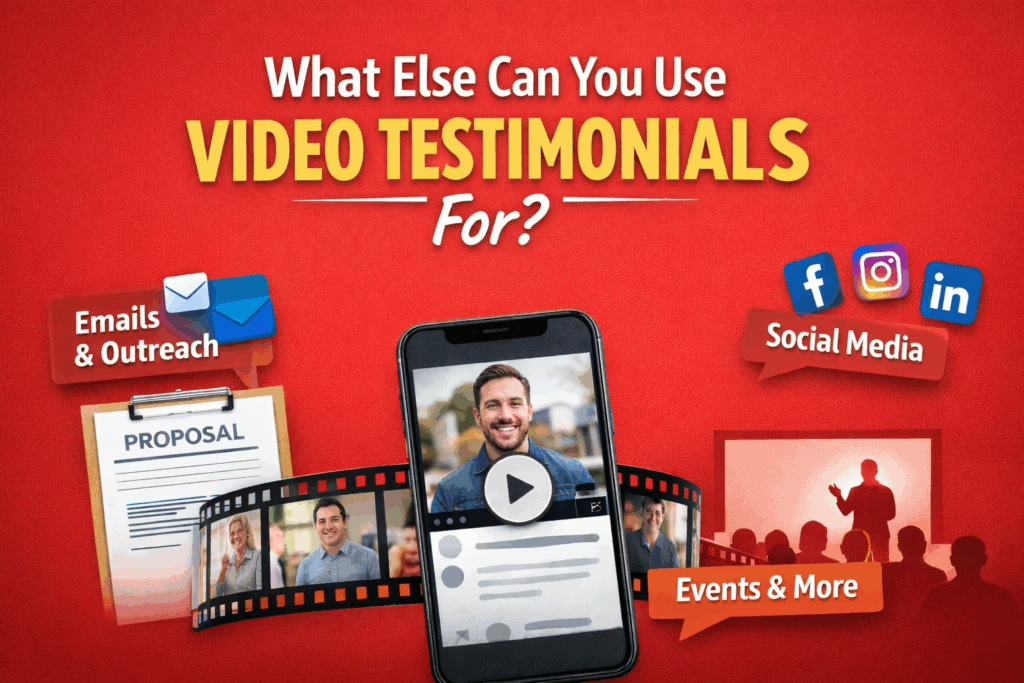
Here are four high-impact ways Melbourne businesses or any business should be using testimonial and case study videos:
- Proposals
- Newsletters
- High-Value Email Outreach
- Social Media
Let’s break these down.
1. Using Testimonials in Proposals
If you have multiple testimonials or case studies covering different client types, your goal should be simple:
Show the right testimonial to the right person. That is, match your case testimonials story as closely with your potential client’s reality as possible.
The easiest way to do this is by including relevant testimonial links in:
- Proposals
- Follow-up emails
- Pitch documents
If a prospect is already interested, a testimonial acts as a third-party emotional nudge—not from you, but from someone like them. If the story matches their reality, it builds a powerful emotional trust and credibility towards your business.
Short or long versions can be embedded or linked, ensuring they actually watch it.
Having someone else explain how good you are is far more persuasive than another page about your company history.
2. Sharing Testimonials in Newsletters
Newsletters are a broader tool, but still effective.
If your newsletter reaches:
- Past clients
- Warm prospects
- Long-term leads
Testimonials help:
- Reinforce brand recall
- Remind people of your value
- Re-ignite interest
They aren’t direct sales generators—but they keep you top of mind.
Because testimonials are emotional, and humans remember emotional information better than rational data, they improve recall when it matters most.
This is one of the intangible ROIs of social proof videos.
3. High-Value Email Outreach (Without Feeling Salesy)
Cold or high-value outreach often feels uncomfortable—because no one likes being sold to.
Using testimonials as a conversation starter, rather than a pitch, changes the tone completely.
Instead of saying “Here’s why we’re great”, you’re saying:
“Here’s how we helped someone like you.”
That small shift makes outreach feel less spammy and more human.
4. Using Testimonials on Social Media
Social media has become a noisy place for self-promotion.
This is exactly why well-structured testimonial content stands out.
Testimonials:
- Educate
- Inform
- Build trust
- Promote—without self-promotion
They allow your customers to do the talking for you.
However, this requires intentional re-editing.
You wouldn’t post a five-minute case study on social media—no one will watch it.
Instead:
- Shorten it to under a minute
- Strengthen the hook
- Focus on the emotional payoff
Testimonials Are Not One-Off Videos
Testimonials, case studies, and case testimonial videos are not one-off assets.
When done well, they continue building trust and credibility for years.
But to truly maximise their value, they should be:
- Re-structured for the channel being used
- Shared in newsletters and social media
- Used in outreach emails
- Or even shown at events or presentations
They key thing is to have this in mind even before you start the process of creating your case studies and testimonials, so that it is much easier to repurpose them for your marketing and sales channels.
In short:
You absolutely should repurpose your social proof videos across your sales and marketing efforts.
That’s how Melbourne businesses or for that matter any other business get the full value from testimonial video production; and why they remain one of the most powerful tools in modern marketing.
Yes. Video testimonials should be used in proposals, emails, newsletters, social media, and sales conversations to build trust and help customers make confident decisions.
Video testimonials influence buying decisions by creating emotional trust and reducing risk, helping buyers feel confident that others like them have already succeeded.
Video testimonials are most effective during the research and consideration stages, when buyers are looking for reassurance and validation before making a decision.
Yes. Including relevant video testimonials in proposals increases trust, credibility, and emotional confidence, often improving conversion rates.
Yes. Video testimonials work well in newsletters and outreach emails because they feel less sales-focused and allow real customers to share their experience.
Most video testimonials for social media should be under one minute, with a strong hook and a clear emotional outcome to keep viewers engaged.
Yes. Video testimonials should be re-edited to suit each platform, with shorter versions for social media and longer versions for websites and proposals.
No. Well-produced video testimonials are long-term assets that can be reused and repurposed across sales and marketing for years.
Melbourne businesses use video testimonials to build trust, stand out in competitive markets, and help potential customers feel confident choosing them.
Maximizing the use of video across multiple channels should start with understanding how you want to use them in the first place.
If you want to find out more about maximizing your video marketing investment, book in a call with Fantestimonial. We believe that marketing shouldn’t be like throwing money into a black hole; as such we always start with your marketing, or training, or sales goals.